Skip to content
Home » Research in Fundraising » Page 4

Research in Fundraising

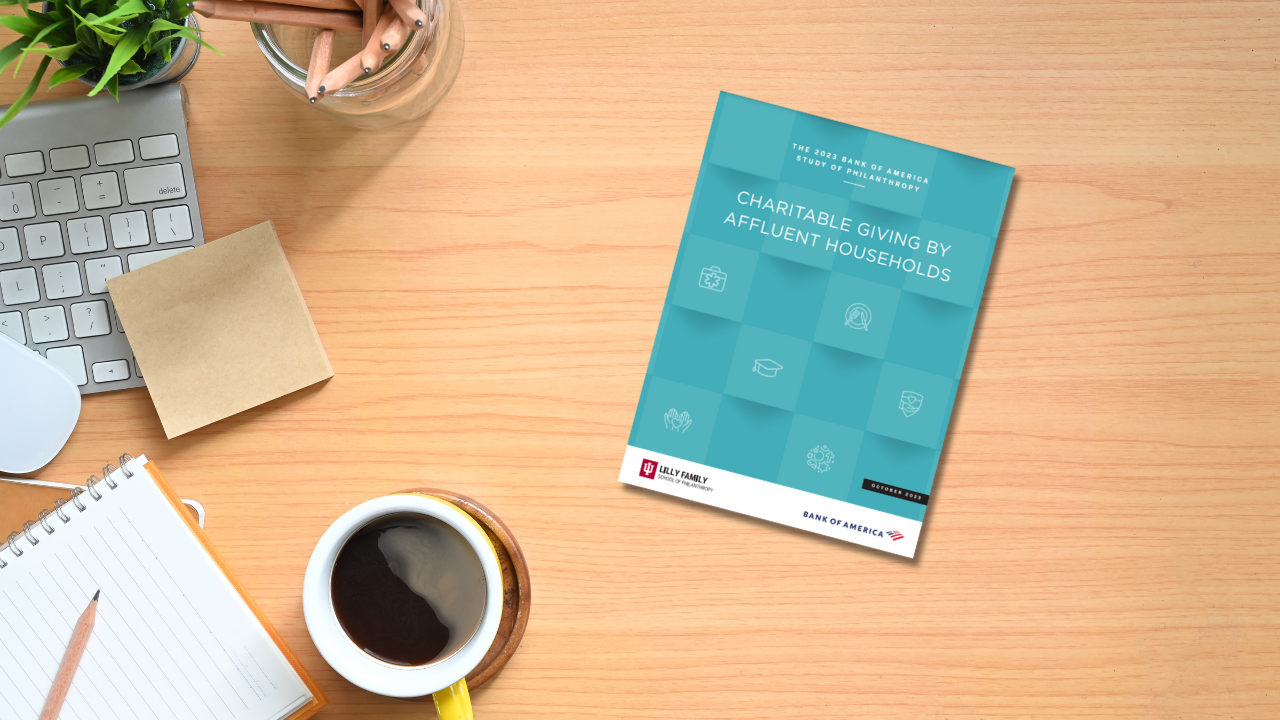
Review of Charitable Giving by Affluent Households

Review of Charitable Giving by Affluent Households – Part 1

The 2023 Bank of America Study of Philanthropy report is the 9th biennial examination about philanthropic attitudes, priorities, and more for affluent US households in 2022. It is written as a collaboration between Bank of America and the Indiana University Lilly Family School of Philanthropy. It is based on 1,623 wealthy US households, defined as either a net worth $1M+ or annual household income of $200K+. The average mean income was $523,472 and average mean wealth of $31M.

Accepting crypto gifts? You need gift acceptance policies.

If your organization has made moves to tap into non-cash giving opportunities like donor-advised funds, gifts of stock, and various types of planned gifts, good for you! Studies have found that nonprofits that invest in their non-cash giving programs grow six times faster than those that stick to cash gifts alone.

Cryptocurrency represents one of the newest and most exciting (but complex) non-cash giving frontiers for nonprofits. Thankfully, accepting crypto gifts isn’t hard today. You can use a third-party processor to facilitate and liquidate the gifts or set up your organization’s own digital crypto wallet to manage and liquidate the assets yourself.

Read More »Accepting crypto gifts? You need gift acceptance policies.
Check out these four ways to incorporate data into your donor communications strategy for better supporter engagement.

4 Ways to Use Data in Your Donor Communications Strategy

As a nonprofit fundraising professional, you understand the importance of donor recognition. Donors are at the core of your fundraising efforts, contributing the funds necessary to fuel your mission.

However, it can be difficult to keep track of so many individuals, let alone figure out how to communicate with them on a personal level. This is where data comes into play. 

Read More »4 Ways to Use Data in Your Donor Communications Strategy